
Population Health Intelligence · CORE20PLUS5
ICB PROTECT
PROTECT helps neighbourhood teams identify the patients most likely to benefit from intervention, improving outcomes while maximising finite clinical capacity.


Used across 25 Integrated Care Boards
Supports over 28 million NHS patients
Interoperable with EMIS & SystmOne
Built for the NHS since 2006, Norfolk Clinical Park
Why now
Built for CORE20PLUS5, Neighbourhood Health and the 10 Year Health Plan
The NHS 10 Year Health Plan, Fit for the Future (2025), sets three shifts for the system: from hospital to community, from sickness to prevention, and from analogue to digital. Its Neighbourhood Health Service organises care around local populations of around 50,000 people and brings professionals together into patient-centred multidisciplinary teams.
At the same time, NHS England's CORE20PLUS5 approach asks systems to narrow healthcare inequalities for their most deprived 20% (the Core20, defined by the Index of Multiple Deprivation), plus locally identified groups, across five clinical priorities: maternity, severe mental illness, chronic respiratory disease, early cancer diagnosis, and hypertension case-finding.
Both agendas point the same way: proactive, targeted, population-based care. Every ICB faces the same tension while delivering it, namely large populations with varying need, finite clinical capacity, real difficulty identifying who will benefit most from intervention, and constant pressure to reduce avoidable admissions and inequalities. ICB PROTECT gives your teams the intelligence to act on both agendas together, in one assured platform.
How it works
Built for CORE20PLUS5, Neighbourhood Health and the 10 Year Health Plan
ICB PROTECT uses population health intelligence to identify the greatest opportunity to improve, prioritise clinical resource where impact is highest, support MDT decision making, and measure outcomes.
01
Identify
Work across your whole registered population to surface patients at risk of deterioration, combining geodemographic profiling with clinical risk indicators so no cohort is overlooked.
02
Prioritise
Rank patients by where intervention is most likely to change the outcome, so teams start with the highest-impact cases rather than the longest list.
03
Intervene
Prioritised cohorts flow into MDT review and personalised care, with gap analysis showing what is outstanding for each patient. Clinical decisions stay with the practice.
04
Measure
Track outcomes, emergency admissions and inequalities over time, validated against national data so value can be demonstrated to system and finance leads.
Why prioritisation matters. ICB PROTECT recognises that risk is not uniform within a cohort. Frailty is a clear example: the electronic Frailty Index (eFI), developed and validated by Clegg and colleagues and now embedded across UK primary care, sorts patients into fit, mild, moderate and severe frailty, and unplanned hospitalisation rises across those categories. But emergency-admission risk still varies widely between otherwise similar patients, so a frailty register identifies a vulnerable group without telling a team where to start. ICB PROTECT adds that layer, pointing finite capacity at the patients where timely intervention is most likely to prevent an admission.
CORE20PLUS5 & Equality of Care
A module for every clinical area of focus
Alongside geodemographic profiling across your region, ICB PROTECT includes a dedicated module for each CORE20PLUS5 priority.
-
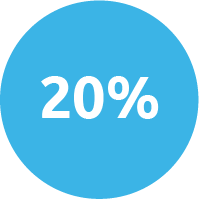
CORE20
Profiles your most deprived 20% and locally defined PLUS groups.
-

Early Cancer Diagnosis
Case-finding to support the 75% stage 1 or 2 ambition.
-

Severe Mental Illness
Finds people with SMI due an annual physical health check.
-

COPD
Proactive review and vaccination uptake to cut exacerbations.
-

Asthma
Surfaces poor control and overdue reviews for action.
-

Hypertension
Detects undiagnosed and uncontrolled hypertension, with lipid optimisation.
-

Maternity
Supports continuity-of-care priorities for at-risk groups.
Evidence & validation
Impact you can check against national data
ICB PROTECT is designed so that benefits can be validated, not just asserted. An independent NHS assessment of the Eclipse approach across eight million patients found a 10% reduction in accident and emergency admissions. Across the Eclipse community the platform now supports population health work in 25 Integrated Care Boards and over 3,300 GP practices.
Every savings figure is validated against national datasets so your finance and analytics teams can scrutinise it. We share the methodology behind any headline figure.
Savings for admissions avoidance are validated using national HES / SUS (PbR) data, and prescribing savings using ePACT2.
Governance & data security
Assured, and clear about who is responsible for what
ICB PROTECT runs on Eclipse Live, an NHS Digital assured Patient Support Platform operated by Eclipse (Prescribing Services Ltd, Company No. 05913240; ICO registration Z2536678). NHS number and date of birth are hashed using an approved 256-bit algorithm, only de-personalised data is accessible through the interface, access is restricted to NHS-email accounts with mandatory two-factor authentication over the HSCN network, and data is encrypted at rest. Information governance, the legal basis for processing and data sharing are agreed with your organisation during onboarding.
The partnership model is deliberately clear about responsibility. Eclipse provides population health intelligence, analytics and prioritisation. Clinical decisions, prescribing and referrals remain with the patient's NHS GP practice and your commissioning NHS organisation. ICB PROTECT informs and targets care; it does not replace clinical judgement or assume clinical authority.
Eclipse Live has been built for the NHS since 2006 and gained NHS Digital assurance in 2017. The platform is ISO 27001 certified, holds Cyber Essentials Plus, and is compliant with the Data Security and Protection Toolkit, interoperable with EMIS and SystmOne under NHS England Section 251 arrangements. Eclipse's NHS work has been recognised nationally, including the HSJ Awards 2021 Connecting Services and Information Award for Covid Protect, delivered in partnership with Norfolk and Waveney. The full list of awards is on the Eclipse awards page.
What activation delivers for your system
Once activated for your NHS organisation, ICB PROTECT gives your teams detailed analytics and gap analysis to identify priority patient groups, surface admissions-avoidance opportunities and target finite clinical capacity where it changes outcomes.
Each live programme is designed to support:
Reduced workload across primary and secondary care
Reduced avoidable admissions for your patient cohorts
Improved support for vulnerable patient groups
Stronger patient self-management
Frequently asked questions
Is ICB PROTECT the same as the Eclipse Equality of Care service?
Yes. ICB PROTECT is how we present the Equality of Care offer for ICBs and neighbourhood teams. The underlying assured platform, modules and validation approach are the same.
How does ICB PROTECT support CORE20PLUS5?
It profiles your Core20 (the most deprived 20% by Index of Multiple Deprivation) and locally defined PLUS groups, and provides a dedicated module for each of the five adult clinical areas: maternity, severe mental illness, chronic respiratory disease, early cancer diagnosis and hypertension case-finding.
Does Eclipse make clinical or prescribing decisions?
No. Eclipse provides intelligence and prioritisation. Clinical, prescribing and referral decisions stay with the patient's NHS GP practice and your commissioning organisation.
How are your impact figures validated?
Admissions-avoidance savings are validated using national HES / SUS (PbR) data; prescribing savings are validated using ePACT2. We share the methodology behind any figure so your teams can check it.
Is the platform information-governance assured?
Yes. Eclipse Live is an assured Patient Support Platform; the relevant accreditations are summarised in the governance section above. Information governance, the legal basis for processing and data sharing are agreed with your organisation during onboarding.
How do we get started?
Through the Eclipse Partnership Programme, beginning with a Commitment Agreement and a regional population health analysis and system demo.